The Importance of Vocabulary Development in Early Childhood
Long before a child writes their first sentence or reads their first chapter book, they are quietly building one of the most powerful tools they will ever own: their vocabulary. Every word a child hears, understands, and eventually uses becomes a building block for thinking, communicating, and learning. This is why the importance of vocabulary development in children is a topic parents, teachers, and early childhood experts continue to emphasize.
In this blog, we'll explore why early language development matters so much in the first few years of life, how it connects to later academic success, and practical vocabulary development activities you can start using today.
Why Vocabulary Development in Early Childhood Matters
Vocabulary development in early childhood isn't just about knowing more words — it's about building the foundation for how a child thinks and expresses themselves. Between birth and age five, a child's brain is developing at its fastest rate, making this window especially important for child language development.
A strong vocabulary helps children:
- Express their needs, thoughts, and feelings clearly
- Understand instructions and follow along in conversations
- Build the comprehension skills needed for reading
- Develop confidence in social situations
- Prepare for academic success in school
Research consistently shows that children who enter school with a rich vocabulary tend to become stronger readers, since word knowledge directly supports reading comprehension. This is one of the strongest arguments for the importance of vocabulary development as an early, ongoing priority rather than something that starts once formal schooling begins.
The Link Between Vocabulary and Early Literacy Skills
Vocabulary and reading are deeply connected. When children encounter new words in books, they are not just decoding letters — they are attaching meaning to those letters. This is why reading and vocabulary development go hand in hand as part of building strong early literacy skills.
Children who are regularly read to are exposed to far more words, sentence structures, and ideas than they typically hear in everyday conversation alone. Storybooks introduce descriptive language, new concepts, and imaginative scenarios that everyday speech rarely covers — all of which contribute to early childhood vocabulary growth.
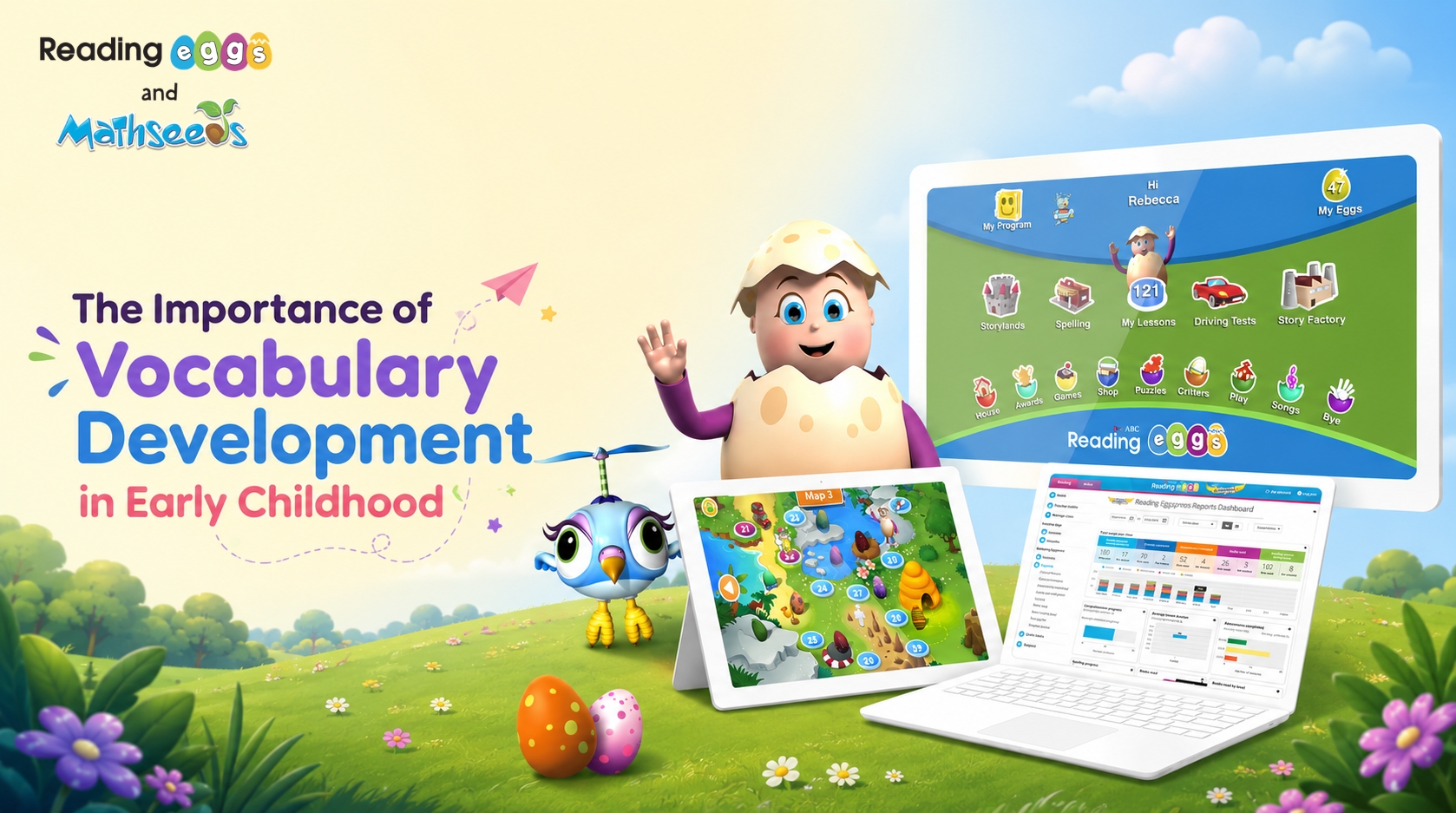
Platforms like Reading Eggs are designed with this connection in mind, using engaging, story-based lessons to introduce new vocabulary in context, helping children absorb meaning naturally as they read.
Simple and Effective Vocabulary Development Activities
You don't need expensive resources to start building your child's vocabulary — just consistency and a little creativity. Here are some easy vocabulary building activities to try at home:
1. Read Aloud Every Day
Reading aloud remains one of the most effective ways to improve vocabulary in kids. Choose age-appropriate books, pause to explain unfamiliar words, and encourage your child to guess meanings from context.
2. Narrate Everyday Activities
Describe what you're doing while cooking, cleaning, or driving. Simple narration ("I'm chopping the carrots into small pieces") exposes children to new words in a natural, low-pressure way.
3. Play Word Games
Games like "I Spy," rhyming challenges, and simple word-matching activities are excellent vocabulary activities for preschoolers, turning learning into play.
4. Ask Open-Ended Questions
Instead of yes/no questions, ask "What do you think will happen next?" or "How does that make you feel?" This encourages children to reach for new words to explain their thinking.
5. Introduce One New Word a Day
Pick a simple word each day, use it in different sentences, and encourage your child to use it too. Repetition across different contexts helps cement understanding.
Vocabulary Activities for Kindergarten and Beyond
As children move into more formal learning environments, vocabulary activities for kindergarten can become slightly more structured while still remaining playful. Activities like sorting words into categories, simple crossword-style puzzles, labeling objects around the house, and storytelling exercises all help reinforce language skills for children in a fun, low-pressure way.
Interactive learning tools can be especially helpful here. Reading Eggs and Mathseeds offer structured, game-based lessons that adapt to a child's level, gradually introducing new vocabulary alongside phonics, comprehension, and even early math language — supporting vocabulary development for kids across multiple subjects, not just reading.
How to Build Vocabulary in Children Consistently
Knowing how to build vocabulary in children effectively comes down to a few key principles:
- Consistency matters more than intensity. Short, regular exposure to new words beats occasional long sessions.
- Context is key. Children learn words better when they see or hear them used in real situations, not just as isolated flashcards.
- Interaction beats passive listening. Conversations, questions, and back-and-forth exchanges build vocabulary faster than one-way instruction.
- Make it enjoyable. Children retain more when learning feels like play rather than a task.
Final Thoughts
The importance of vocabulary development in children cannot be overstated. It shapes how children communicate, understand the world, and eventually read and write with confidence. The good news is that building a strong vocabulary doesn't require complicated methods — just consistent conversation, reading, and playful engagement.
If you're looking for a fun, structured way to support your child's early language development, Reading Eggs & Mathseeds offers engaging, curriculum-aligned lessons that make learning new words — and so much more — an exciting part of your child's everyday routine.
Start building your child's vocabulary today, one word — and one story — at a time.