Kindergarten marks a crucial phase in your child's literacy journey. Finding the right phonics worksheet for KG students can transform early learning experiences and set the stage for lifelong reading success. This guide explores how quality phonics worksheets support kindergarten learners.
Why Phonics Worksheets Are Essential for KG Students
Children in kindergarten are at the perfect developmental stage to grasp phonics concepts. A well-structured phonics worksheet preschool teachers recommend helps young learners connect letters with their corresponding sounds. This foundational skill enables children to decode words independently rather than relying solely on memorisation.
Research demonstrates that systematic phonics instruction during the KG years leads to stronger reading abilities throughout elementary school. When children understand that written symbols represent sounds, they gain the tools needed to tackle new words confidently.
Understanding the KG Learning Journey
Kindergarten students typically range from ages 5 to 6. Quality phonics worksheets for this age group feature colourful designs, simple instructions and engaging activities that maintain focus.
Children are refining fine motor skills alongside cognitive development. Tracing letters and circling pictures serve dual purposes - reinforcing phonics concepts while strengthening hand muscles.
Key Components of Effective KG Phonics Worksheets
Superior phonics worksheets present clear, large-print letters that developing readers can easily distinguish. Each worksheet focuses on one primary concept - letter recognition, beginning sounds or word building.
Visual elements play a crucial role. Pictures help children make connections between sounds and real objects. Interactive components like colouring and matching keep learners engaged.
Types of Phonics Worksheets for Kindergarten
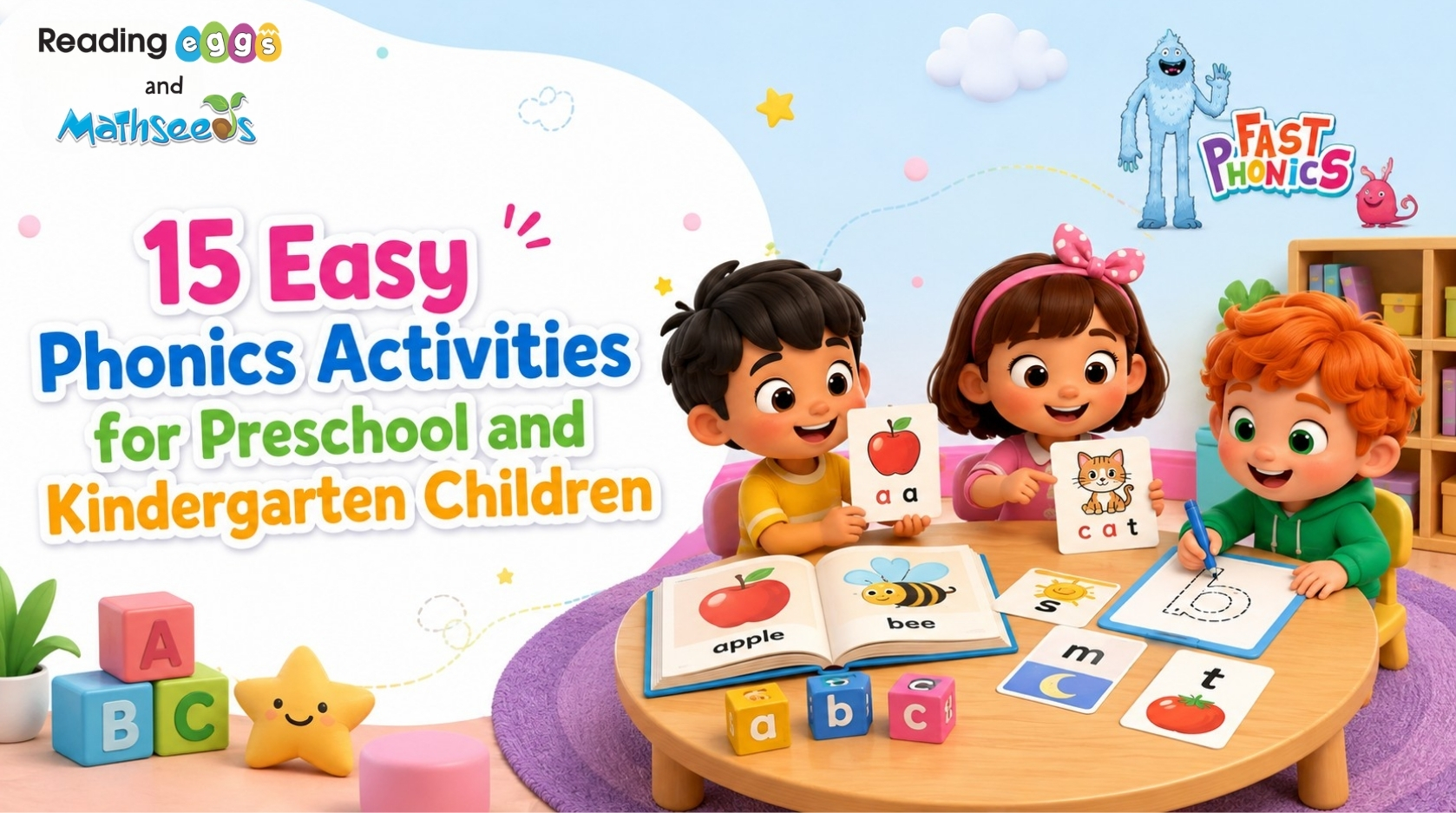
Alphabet recognition worksheets introduce letter identification in uppercase and lowercase forms. Sound isolation worksheets teach children to identify sounds at word beginnings, middles or ends. Blending worksheets guide students in combining sounds to form words.
Word family worksheets group similar patterns like "cat," "bat" and "hat" for easier decoding. CVC word worksheets focus on three-letter words which are perfect starting points. Rhyming worksheets develop sound pattern recognition.
Integrating UKG English Worksheets into Learning
Upper kindergarten or UKG represents an advanced stage ready for more complex challenges. UKG English worksheets build upon foundational skills with activities involving digraphs, blends and longer words bridging the gap to reading fluency.
Look for progressive difficulty levels that challenge without frustrating learners. Worksheets should introduce new concepts while continuously reviewing previously learned skills.
Reading Eggs and Mathseeds: Your Complete KG Learning Solution
Reading Eggs and Mathseeds with Ratna Sagar provides comprehensive support for kindergarten phonics education. This award-winning platform offers structured lessons designed for KG learners aligned with NEP 2020 standards covering pre-nursery through class 8.
The platform includes over 5000 printable worksheets complementing interactive animated lessons. Children practice phonics through games and videos while parents track progress. The Fast Phonics component targets sound-letter relationships systematically.
With 24/7 unlimited access, families can practice on their schedule. The 3500+ eBooks available provide opportunities to apply growing phonics knowledge to real reading.
Effective Teaching Strategies for KG Phonics
Success with phonics worksheets depends on implementation approach. Begin each session by reviewing previously learned concepts. Keep individual worksheet sessions between 15 to 20 minutes to match kindergarten attention spans.
Use multi-sensory techniques to enhance learning. Have children say sounds aloud while tracing letters. Incorporate movement by asking children to jump or clap when they hear target sounds.
Creating an Optimal Learning Environment
Designate a consistent workspace for phonics activities. This area should have good lighting and minimal distractions. Organise materials systematically using folders labeled by phonics concept. Display completed work prominently to validate children's efforts.
Monitoring Progress and Making Learning Fun
Pay close attention to patterns in your child's worksheet performance. Celebrate small victories enthusiastically. If a child consistently struggles with a particular concept, spend additional time on that skill.
Transform routine worksheet practice into anticipated activities. Let children choose between worksheets to complete. Incorporate games like phonics bingo boards. Connect phonics learning to your child's interests for increased engagement.
Conclusion
Quality phonics worksheets form the foundation of successful kindergarten reading instruction. When you combine a thoughtfully designed phonics worksheet for KG students with engaging teaching methods, children develop the skills needed for reading confidence. Whether using a phonics worksheet preschool educators suggest or more advanced UKG English worksheets, make learning enjoyable.
Reading Eggs and Mathseeds with Ratna Sagar offers comprehensive support for parents navigating phonics education. The platform's combination of printable worksheets, interactive lessons and reading library provides everything needed for kindergarten literacy success.
Frequently Asked Questions
Q1: How many phonics worksheets should KG students complete daily?
One to two worksheets per day is appropriate for kindergarten students. Focus on quality completion with full understanding rather than rushing through multiple worksheets. Keep sessions between 15 to 20 minutes.
Q2: What's the difference between LKG and UKG phonics worksheets?
LKG worksheets focus on basic letter recognition and beginning sounds while UKG English worksheets introduce more complex concepts like digraphs, blends and longer words as children prepare for first grade.
Q3: Can phonics worksheets replace reading books to children?
No. Worksheets teach phonics skills but children also need exposure to quality children's literature. Combine worksheet practice with daily read-aloud sessions for comprehensive literacy development.
Q4: What if my KG child resists doing phonics worksheets?
Try different times of day when energy is higher. Incorporate more playful elements or alternate between worksheets and hands-on phonics games. Never force practice as negative associations harm long-term learning motivation.
Q5: How long does it take for KG students to master phonics?
Most kindergarteners need the full academic year to master basic phonics concepts. Some children progress faster while others need additional time. Consistent daily practice matters more than speed of mastery.