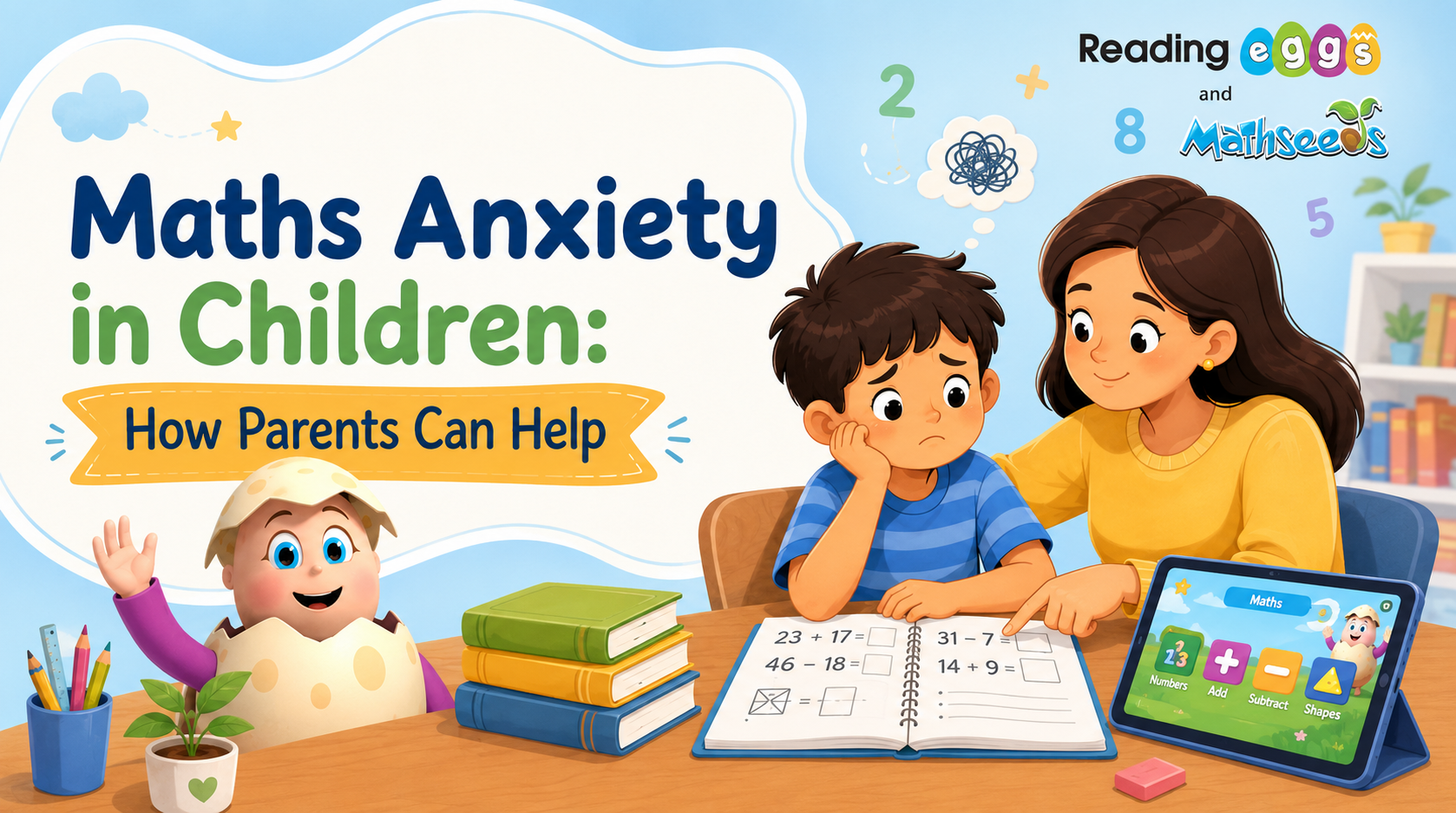
Maths Anxiety in Children: How Parents Can Help
Does your child's stomach turn into knots at the mention of a maths worksheet? Do they say "I'm just bad at maths" before they've even tried a problem? If so, your child may be experiencing maths anxiety — a real and surprisingly common challenge that affects how kids feel about, and perform in, maths.
The good news is that maths anxiety in kids is not permanent. With the right support, most children can move from dread to confidence. Here's what every parent should know about maths anxiety in children, why it happens, and how to help your child overcome it.
What Is maths Anxiety in Kids?
Maths anxiety is a feeling of tension, worry, or fear that shows up specifically around maths — whether it's doing homework, taking a test, or even just thinking about numbers. It's different from simply disliking maths. A child with maths anxiety may:
Avoid maths homework or make excuses to skip it
Complain of a stomach ache or headache before maths class or tests
Freeze up or "go blank" during timed tests, even if they know the material
Say things like "I'm not a maths person" or "I'll never get this"
Rush through problems just to be done with them
Left unaddressed, this anxiety can snowball into genuine maths learning difficulties, not because the child lacks ability, but because anxiety itself interferes with working memory and focus.
Causes of maths Anxiety in Children
Understanding the causes of maths anxiety in children is the first step toward helping them. Common triggers include:
Timed tests and pressure. Racing against a clock can trigger panic, even in kids who understand the concepts well.
Negative early experiences. A single embarrassing moment, like being wrong in front of the class, can create a lasting association between maths and shame.
Parental or teacher anxiety. Children absorb attitudes from the adults around them. A parent who says "I was always terrible at maths" unintentionally signals that struggling is expected — or even inherited.
Gaps in foundational skills. When a child misses a key concept, every lesson built on top of it feels harder, fueling frustration and self-doubt.
Comparison with peers. Constantly seeing classmates finish first can make a child feel "behind," even when they're progressing just fine.
Why Building maths Confidence Matters
Maths confidence in children isn't just about grades. Confidence affects whether a child is willing to try, make mistakes, and keep going — the exact habits that lead to real learning. Kids who believe they can improve at maths (a "growth mindset") tend to outperform kids who believe maths ability is fixed. That's why building maths confidence in kids early on pays off far beyond the classroom.
How to Help Children With maths Anxiety
Here are practical, parent-tested strategies for overcoming maths anxiety at home.
1. Normalize Mistakes
Praise effort and problem-solving, not just correct answers. Try phrases like, "I love how you tried three ways to solve that," instead of only celebrating the right answers. This reframes mistakes as part of learning rather than failure.
2. Watch Your Own maths Talk
Avoid saying "I'm bad at maths" in front of your child. Instead, model curiosity: "Let's figure this out together" goes a long way in reducing maths anxiety.
3. Make maths Low-Stakes and Fun
Bring maths into everyday life through cooking, shopping, or games, where there's no test and no pressure. When maths feels like play instead of performance, anxiety naturally drops.
4. Break Problems Into Small Steps
Big, multi-step problems can overwhelm an anxious child. Help them break it down one small step at a time, and celebrate each step completed.
5. Avoid Time Pressure at Home
While school tests may be timed, home practice doesn't need to be. Let your child work at their own pace to rebuild trust in their own ability.
6. Identify and Fill Skill Gaps Early
If a child is anxious because they've missed a foundational concept, going back to reinforce that concept (without judgment) can make everything that follows easier.
7. Use Encouraging, Adaptive Learning Tools
Programs that adjust to a child's level — rather than a one-size-fits-all worksheet — let kids progress at their own pace and experience regular, genuine wins. This is where a tool like Reading eggs & mathseeds can help: it's designed for young learners and uses playful, self-paced lessons that build skills step-by-step, so children experience success before they encounter frustration.
Similarly, strong literacy skills support maths learning too, since word problems require reading comprehension. Reading Eggs & Mathseeds offers a similarly gentle, motivating approach to building foundational skills, reinforcing the same confidence-first philosophy that helps with maths anxiety.
Helping Kids Overcome maths Anxiety: A Long-Term Mindset
Helping kids overcome maths anxiety isn't a one-time conversation — it's an ongoing shift in how maths is talked about and experienced at home. Be patient with the process. Celebrate small wins. Remind your child (and yourself) that struggling with a new concept is a normal, necessary part of learning — not a sign that they "can't do maths."
Over time, as your child racks up small successes, their brain starts to associate maths with capability instead of fear. That's the real goal: not eliminating every hard maths problem, but replacing dread with the belief that they can figure it out.
The Bottom Line
maths anxiety in children is common, understandable, and — most importantly — changeable. By staying calm, encouraging effort over perfection, and using supportive, adaptive tools like Reading Eggs & Mathseeds, parents can help their children build lasting maths confidence and turn "I can't do this" into "I can figure this out."