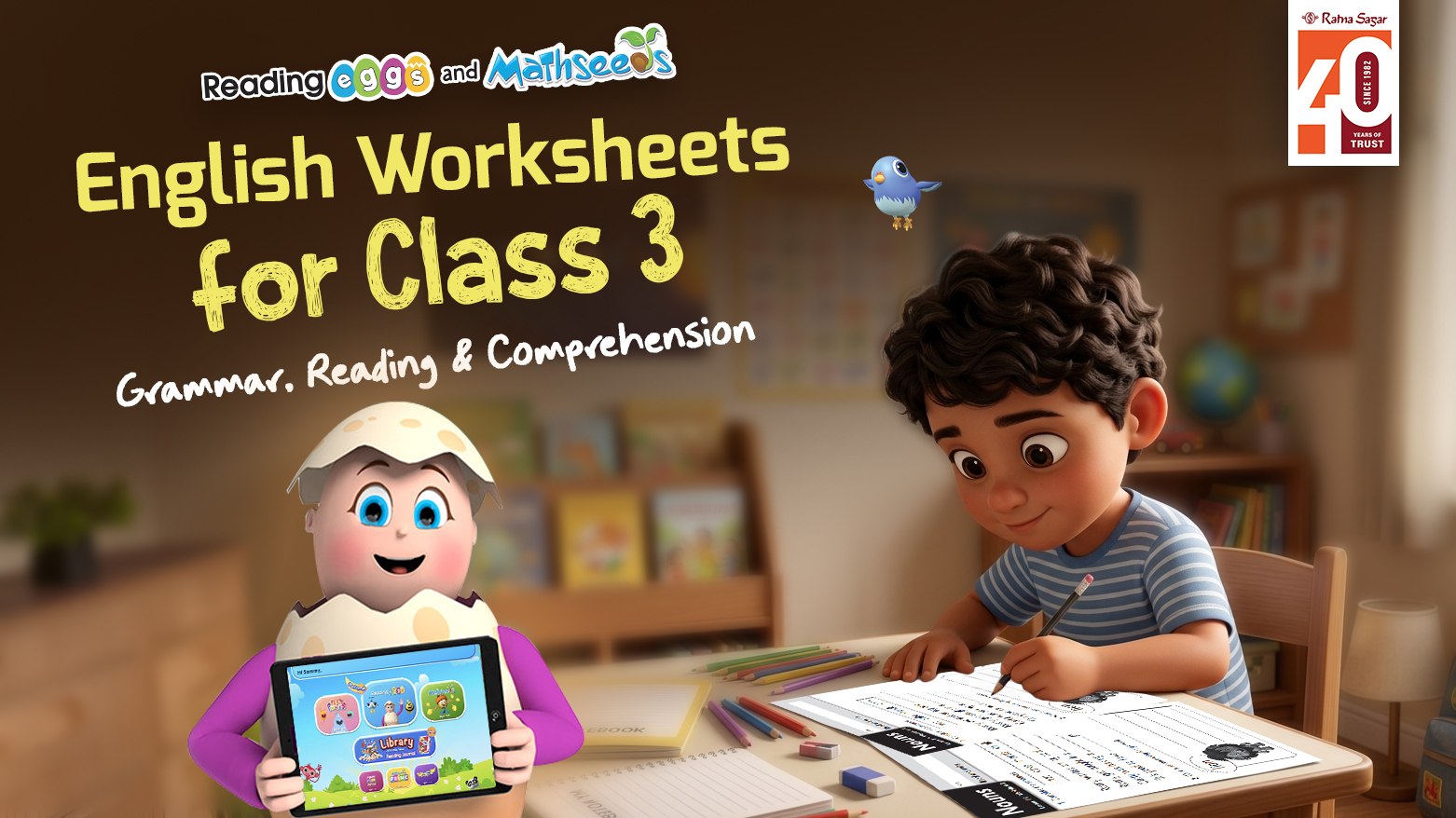
English Worksheets for Class 3 — Grammar, Reading & Comprehension
Why English Worksheets Matter More Than Most Parents Realise
Ask any Class 3 teacher what separates children who read confidently from those who struggle, and the answer is almost always the same — consistent practice outside the classroom. That practice, when done well, does not have to mean hours of homework or expensive tuition. A well-designed English worksheet, used regularly at home, can quietly do more for a child than a month of passive listening.
By Class 3, children are expected to move well beyond letter recognition. They are now constructing sentences, identifying nouns, using punctuation, and reading short passages with understanding. The jump from Class 1 English — where the focus is largely on phonics and sight words — to Class 3 is significant. Worksheets help bridge that gap in a structured, measurable way.
What Should an English Worksheet for Class 3 Cover?
A good Class 3 English worksheet is not just a fill-in-the-blank exercise. It should work across three key areas:
- Grammar
By Class 3, children should be getting comfortable with:
- Nouns and pronouns — identifying common, proper, and collective nouns in sentences
- Verbs and tenses — simple present, past, and future
- Adjectives — describing words and their placement in a sentence
- Punctuation — full stops, commas, question marks, and exclamation marks
A noun worksheet for Class 1 lays the groundwork; by Class 3, children should be applying those concepts in more complex sentences without prompts.
- Reading Comprehension
Reading comprehension worksheets present a short passage followed by questions. At Class 3 level, these questions test:
- Literal understanding (what happened in the passage)
- Vocabulary in context (what does a particular word mean here)
- Inference (why did a character do something)
Children who have been practising since Class 1 English — using structured reading programmes and phonics-based learning — tend to handle comprehension tasks with far greater ease than those who haven't.
- Writing and Expression
Short answer responses, reordering jumbled sentences, completing stories, and writing simple paragraphs all feature in good Class 3 English worksheets. These tasks develop coherent thinking and teach children to communicate in writing, not just speak.
Building the Foundation: From LKG to Class 3
It helps to understand how early years' learning shapes a Class 3 child's English ability. Children who used UKG English worksheets and practised phonics through games in LKG carry those skills forward. By the time they reach Class 3, they are not learning English from scratch — they are refining and expanding what was built in those early years.
This is also where FLN — Foundational Literacy and Numeracy — becomes relevant. FLN full form in education stands for Foundational Literacy and Numeracy, a cornerstone of India's National Education Policy 2020 (NEP 2020). The FLN framework ensures that children achieve basic reading, writing, and arithmetic skills by the end of Class 2, so that Class 3 becomes a year of confident consolidation rather than catch-up. Schools and parents who take FLN seriously tend to see noticeably stronger performance across all subjects from Class 3 onwards.
The Role of Sight Words in English Fluency
One element that does not get enough credit in primary English learning is sight words. These are common words — the, is, are, was, they, with, from — that appear so frequently in written English that children are far better off recognising them instantly rather than decoding them phonetically each time.
Sight words for kids are introduced as early as LKG and UKG, and by Class 3, a child who knows their sight words well can read passages fluidly, which frees up their brain to focus on meaning and comprehension rather than word-by-word decoding. If your Class 3 child still stumbles over these common words, a quick sight words revision worksheet can make a surprising difference in reading speed and confidence.
Choosing the Right Worksheets for Class 3
Not all worksheets are created equal. Here is what to look for:
Age-appropriate difficulty: The worksheet should be challenging without overwhelming. Class 3 grammar tasks should go slightly beyond what was covered in the English worksheet for Class 2, not simply repeat it.
Variety of task types: A mix of multiple choice, short answer, matching, and short writing tasks keeps children engaged and tests different cognitive skills.
CBSE alignment: If your child follows the CBSE curriculum, worksheets should match the syllabus expectations for Class 3 English. This ensures that practice at home directly supports what is taught in school, rather than creating confusion with mismatched content.
Printed vs. digital: Both have value. Printed worksheets build handwriting and fine motor skills. Digital, interactive worksheets — like those available through Reading Eggs & Mathseeds — offer immediate feedback, which is enormously useful for self-paced learning at home.
How Reading Eggs & Mathseeds Supports Class 3 English Learning
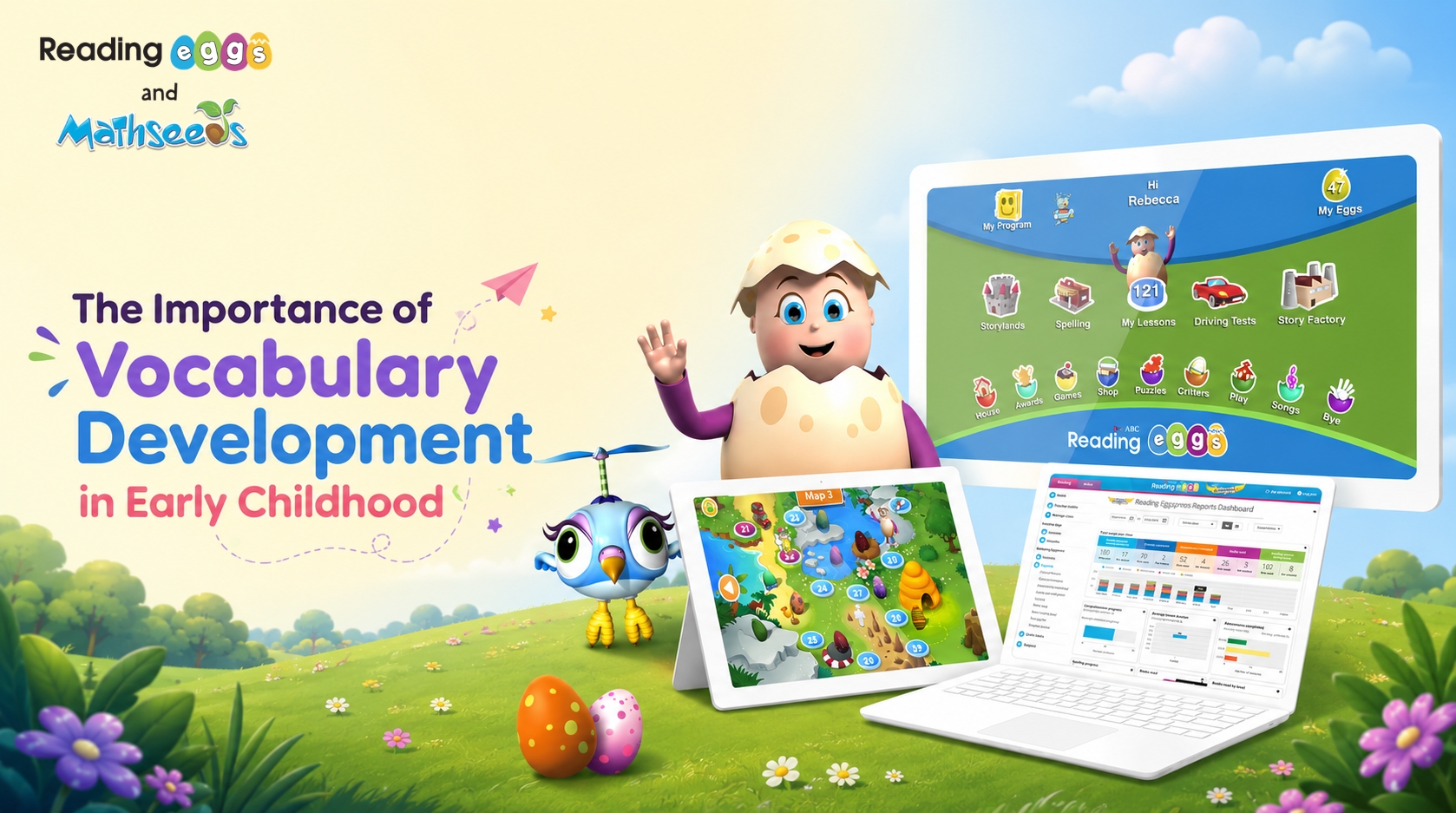
Reading Eggs, available in India through Ratna Sagar at re.rsgr.in, is a multi-award-winning online learning programme designed around exactly this kind of skill-building. Covering Pre-Nursery through to Class 8, it offers over 5,000 worksheets for practice and handwriting improvement, alongside 3,500+ eBooks to improve reading skills.
The platform is built on the NEP 2020 framework, which means its content is designed to meet FLN goals and support children's sequential development in English, Maths, and Phonics. For Class 3 children specifically, the Reading Eggs & Mathseeds programme moves into more structured comprehension, fluency, and vocabulary building — all in an environment that is animated, interactive, and genuinely enjoyable for children.
Parents can access a 7-day free trial directly from the website, which is a low-pressure way to see whether the programme suits their child before committing to a subscription.
Practical Tips for Using Worksheets at Home
- Set a short, fixed time each day — 15 to 20 minutes of focused worksheet practice is more effective than an hour of reluctant, distracted work.
- Review together — go through completed worksheets with your child. Ask them to explain their answers. This one step turns a passive activity into an active learning conversation.
- Alternate grammar and comprehension — do not do the same type of worksheet every day. Grammar one day, comprehension the next keeps things fresh and ensures balanced skill development.
- Celebrate effort, not just accuracy — Class 3 children who are praised for trying and improving are far more likely to maintain a positive relationship with English practice than those who are only praised for getting everything right.
Final Thoughts
English worksheets for Class 3 are a simple, proven tool — but only when they are used thoughtfully and consistently. The children who thrive in English at the primary level are almost always those whose early years were filled with phonics games, sight word practice, regular reading, and structured writing tasks. By Class 3, the foundations should be in place. Worksheets help children build upwards from those foundations with confidence.
If you are looking for a programme that combines structured worksheets with engaging digital learning, Reading Eggs & Mathseeds by Ratna Sagar is well worth exploring. Visit re.rsgr.in to start your free trial today and give your child the practice environment they deserve.